At a time when geopolitical tensions in the Middle East—particularly around Iran and the Strait of Hormuz—are weighing on oil markets and directly influencing fuel prices at the pump, transport companies are facing a dual challenge: how to control their fuel costs while securing their supply.
Energy autonomy is becoming a key issue for transport operators.
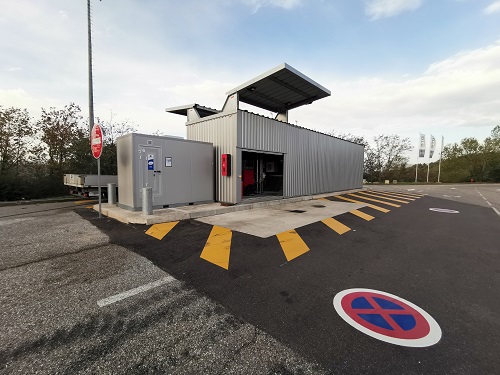
To address this, Blocalps, a French designer and manufacturer of containerized fuel stations, provides modular, durable, and customizable solutions that enable companies to store and distribute their fuel directly on their operating sites.
What is a containerized fuel station ?
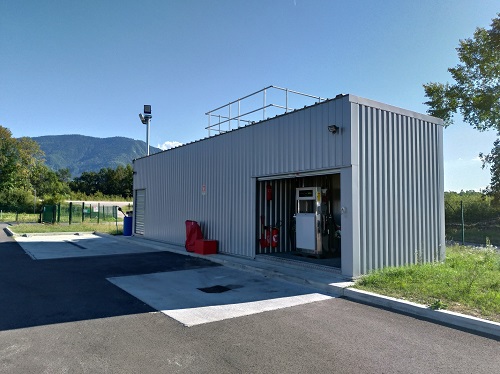
A containerized fuel station is a turnkey solution, built from a shipping container or custom-designed to meet the specific needs of the transport operator and the constraints of their site. It takes into account:
A containerized fuel station includes:
Thanks to their modular and compact design, these mobile fuel stations can be quickly installed on a transport site, logistics platform, or operational base, without excavation work—unlike traditional fuel stations.
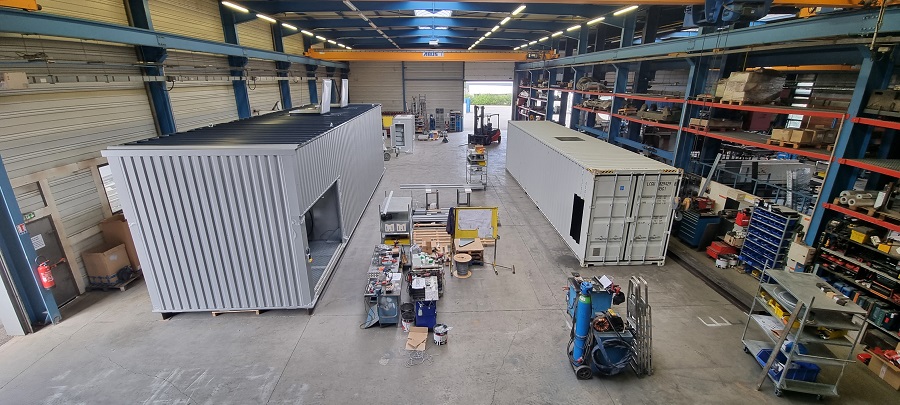
At Blocalps, we design and manufacture custom mobile fuel stations from A to Z. All operations are carried out in our workshops: we build the container and handle the assembly and integration of the equipment. With more than 800 stations installed, we master every stage of the process—from production and quality control to logistics and commissioning.
Discover the different stations in the BLOCALPS range.
Benefits for transport operators
1.Fuel cost management
By storing fuel in bulk when prices are low, transport operators can mitigate the impact of sudden market increases. This bulk purchasing and storage strategy helps optimize costs over the long term and reduces exposure to price fluctuations.
2.Reduced downtime
Having fuel available on-site eliminates the need for frequent trips to distant or congested stations. This results in less idle time, improved route planning, and smoother operations.
3.Reduced dependence on external infrastructure
In times of crisis or supply disruptions, having your own fuel station means you are no longer dependent on the availability or pricing of public stations. It is a step toward controlled energy autonomy for the company.
4.Adaptability and modularity
Containerized stations can be designed for various capacities (from a few thousand to several tens of thousands of liters) and for different types of fuel (petrol, diesel, GNR, biofuels, HVO, B100, etc.). They can also be relocated as site requirements evolve.
Containerized fuel stations: a solution designed for the future